Spinal decompression is a gentle treatment that helps relieve pressure on irritated nerves in the lower back. When a disc herniates, the soft inner material pushes out and can press on nearby nerve roots, leading to sharp pain, burning, tingling, or weakness that may travel into the hips, legs, or feet. Many people are told they need to live with it or jump straight to injections or surgery. Spinal decompression offers a different approach. Creating controlled stretches in the spine helps discs move into a healthier position, improves circulation, and supports the body’s own ability to calm inflammation and heal. The goal is simple and practical: relief of pain so you can sit, stand, walk, and sleep with more comfort again.
What Is A Herniated Disc
Between each vertebra in your spine is a disc that works like a cushion and shock absorber. Each disc has a tough outer ring and a softer inner center. Over time or after an injury, tiny tears can develop in the outer ring. When that happens, some of the material from the center can push outward. This is what people call a herniated disc or slipped disc. In the lower back, this often occurs at the L4, L5, or L5-S1 levels, where the spine carries a lot of load. The disc itself does not have strong pain receptors, but the pressure and inflammation around a herniated disc can irritate nearby nerves that travel into the legs. That is when you may feel sciatica, shooting pain, numbness, or weakness. A herniated disc can be very uncomfortable, but in many cases, it can improve with the right combination of movement, hands-on care, and decompression rather than needing surgery.
Why Herniated Discs Cause So Much Pain
The space where your spinal nerves exit the spine is already quite small. When a disc herniates, even a few millimeters of extra material can narrow that space and put pressure on the nerve root. At the same time, the body responds with inflammation. Swelling can further crowd the nerve and create chemical irritation. Nerves are built to carry messages, not to tolerate pressure. When they are compressed, they become irritable, sending signals that you feel as sharp pain, burning, or tingling. You might notice pain that gets worse when you sit, cough, or sneeze, because those positions briefly increase pressure inside the disc. Over time, the muscles around the spine may tighten up to guard the injured area, which can create even more stiffness and soreness. All of this together explains why a herniated disc can turn simple daily activities into a struggle and why reducing pressure around the disc and nerve is so important for lasting relief.
What Is Spinal Decompression Therapy
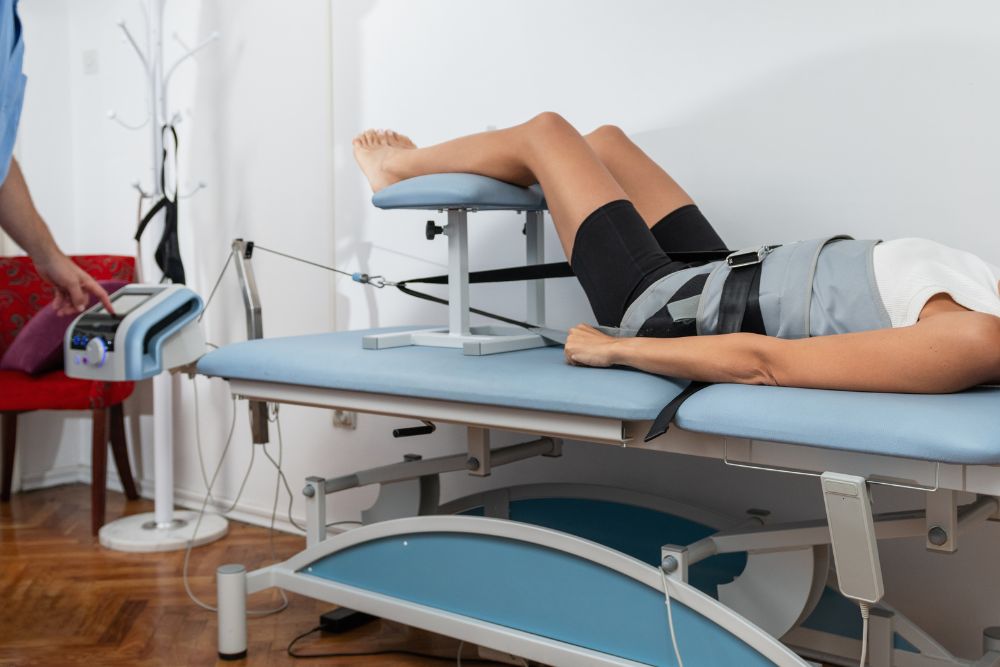
Spinal decompression therapy is a specific type of traction that gently stretches the spine in a controlled and very precise way. You lie comfortably on a padded table that is designed to move in response to a computerized program. A harness is placed around your pelvis and sometimes around your upper body. During treatment, the system applies a measured pulling force and then relaxes in smooth cycles. Unlike old traction methods that pulled with a constant force, modern decompression uses a pattern of slow pulls and releases. This intermittent style of traction encourages the disc to shift pressure away from the area that is bulging and helps create a small negative pressure inside the disc. That negative pressure can help draw bulging material slightly back toward the center, which can ease pressure on the nerve. At the same time, the gentle stretch encourages better fluid exchange, bringing water, oxygen, and nutrients into the disc tissues to support healing.
How Spinal Decompression Relieves Herniated Disc Pain
Spinal decompression helps herniated discs in several ways that work together over time. First, the controlled stretch reduces pressure on the disc and nerve roots. As the space between the vertebrae is gently increased, it opens more room for the disc and nerves. Second, the negative pressure created inside the disc can help reduce the size of a bulge. Even a small change in disc position can make a big difference in how a nerve feels. Third, decompression improves circulation around the disc. Discs do not have a direct blood supply the way muscles do. They depend on movement and pressure changes to draw in nutrients and flush out waste. Decompression acts like a pump. As the spine cycles through gentle stretch and relaxation, fluid exchange improves and the environment around the disc becomes more supportive of healing. Finally, decompression often calms tight muscles around the lower back by giving them a chance to relax. When muscles are less guarded, movement feels easier and pain levels often decrease.
What A Typical Spinal Decompression Session Feels Like
Most people are pleasantly surprised by how comfortable spinal decompression feels. After a brief evaluation and setup, you will lie on the decompression table either on your back or sometimes on your stomach, depending on the equipment and your specific needs. A harness is placed around your hips and gently secured. The computer is programmed with settings tailored to your height, weight, and the area of your spine that needs treatment. As the session begins, you feel a gentle pulling sensation in your lower back and hips. The table may tilt or separate slightly as it creates the controlled stretch. This pull is not a sudden jerk. It gradually increases to a level that is therapeutic but still comfortable, then slowly releases. Many people describe it as a feeling of lengthening or lightness in the spine. A typical session lasts around fifteen to twenty five minutes. It is common to feel relaxed or even drowsy by the end. Some people notice relief right away, while for others the improvement builds over several sessions as pressure gradually decreases and tissues adapt.
Who May Be A Good Candidate For Spinal Decompression
Spinal decompression is often considered for people who have herniated or bulging discs in the lower back, especially when pain travels into the leg. It can also be helpful for certain cases of chronic low back pain, sciatica, spinal stenosis, or degenerative disc disease that have not responded well to rest, basic exercises, or medication alone. A careful evaluation is essential before beginning. At Khorrami Chiropractic Wellness Center, your chiropractor will review your health history, perform a hands on examination, and may review imaging such as X rays or MRI if available. This helps confirm that your symptoms are likely coming from a disc issue that can benefit from decompression. Certain conditions are not good matches for decompression, such as severe osteoporosis, spinal fractures, some types of spinal instability, active infections, pregnancy, or the presence of certain metal implants. By taking the time to screen carefully, your chiropractor can determine whether spinal decompression is an appropriate and safe part of your care plan.
How Many Sessions You May Need
Herniated discs usually do not appear overnight and they rarely resolve in a single visit. Spinal decompression works best as a series of sessions that build on each other. Many care plans include two to four visits per week for several weeks, followed by a gradual taper as your symptoms improve. The exact number of sessions depends on the severity of the herniation, how long you have had symptoms, your overall health, and how well you respond. Some people notice meaningful changes in pain and ease of movement within the first few treatments. Others experience a slower but steady improvement in the intensity and frequency of symptoms over several weeks. Your chiropractor will monitor your progress, check how your body is responding, and adjust the plan as needed. The goal is not only to feel better in the short term but to support your spine so that relief is more durable.
Spinal Decompression Compared With Other Treatment Options
When you have a herniated disc, you may hear about several different treatment approaches. Medications such as anti inflammatory drugs or muscle relaxants can temporarily reduce pain and spasm, but they do not change the mechanical pressure on the disc and nerve. Epidural steroid injections can decrease inflammation around the nerve root, which may bring relief for some people, yet the underlying disc mechanics remain the same. Surgery can be very helpful in certain cases especially when there is severe weakness or bowel or bladder changes but it also comes with more risk and recovery time. Spinal decompression aims to change the physical forces on the disc in a noninvasive way. It is often combined with chiropractic adjustments, specific exercises, and other therapies such as laser or shockwave to address different layers of the problem. For many people, decompression can be an important step to try before considering more invasive procedures, and it can also support recovery after other treatments by keeping the spine moving well.
How Chiropractic Care And Decompression Work Together
Spinal decompression is powerful on its own, but it often works best as part of a complete chiropractic care plan. Chiropractic adjustments help restore motion and alignment to spinal joints that are not moving well. Decompression focuses directly on reducing disc and nerve pressure. When combined thoughtfully, adjustments can improve the way the spine moves, while decompression improves the way the disc and nerves feel. At Khorrami Chiropractic Wellness Center, your chiropractor may also include soft tissue work, gentle stretching, and specific home exercises to strengthen your core and hip muscles. These elements together help stabilize your lower back so that the relief you gain from decompression has a better chance of lasting. Education is also a key part of the process. You will learn how to sit, lift, sleep, and move in ways that support your healing disc rather than stress it.
Everyday Habits That Support Your Results
Your time on the decompression table is important, but what you do in the rest of your day also matters. Simple habits can either support or slow your healing. Try to avoid prolonged sitting in soft couches or chairs that sag, since they can increase pressure on the lower discs. When you sit, choose a firm chair, keep your feet flat on the floor, and gently support the natural curve of your lower back with a small cushion or rolled towel. When you lift objects, bend from your hips and knees, keep the item close to your body, and avoid twisting while you are holding a heavy load. Short walks throughout the day help keep circulation moving and prevent stiffness. Staying hydrated and eating in a way that supports a healthy weight can also reduce strain on the spine. Your chiropractor can give you specific movement guidelines and simple exercises that match your stage of healing so you know what is safe and helpful.
Red Flags And When To Seek Prompt Care
Most people with a herniated disc can be helped with conservative care such as chiropractic, spinal decompression, and specific exercise. However there are certain warning signs that require immediate medical attention. If you notice sudden and significant weakness in one or both legs, difficulty lifting your foot as you walk, loss of control over your bladder or bowels, or numbness in the area around the groin, seek emergency evaluation right away. These can be signs of a rare but serious condition that needs urgent treatment. Also pay attention if your pain is associated with unexplained weight loss, fever, or a history of cancer. In these situations, your chiropractor will coordinate promptly with your medical doctor or specialist. The first priority is always your safety. When serious conditions are ruled out, it becomes much easier to focus on effective conservative care that works with your body.
What Progress With Spinal Decompression Can Look Like
Improvement with spinal decompression often shows up in stages. At first, you may notice small but meaningful changes such as being able to sit a little longer, sleep with fewer interruptions, or stand up from a chair with less hesitation. As pressure on the nerve decreases, episodes of sharp pain may become less frequent or less intense. Numbness and tingling can take longer to change, because nerves heal slowly, but over time many people notice a gradual return of more normal sensation. Strength in the leg can also improve as the nerve recovers and as you progress through strengthening exercises. Your chiropractor will track these changes with you, celebrating wins and adjusting the plan as needed. The goal is not only fewer bad days but a higher overall level of comfort and confidence in your back so that you can return to the activities that matter most to you.
The Bottom Line
A herniated disc in the lower back can be painful and limiting, but it does not always require injections or surgery. Spinal decompression offers a gentle, noninvasive way to reduce pressure on irritated nerves, improve disc health, and support your body’s natural healing processes. When combined with chiropractic adjustments, targeted exercises, and smart daily habits, it can be a powerful tool to help you move, sit, work, and rest with more ease. Every spine and every story is different, which is why a personalized plan matters. With the right evaluation and guidance, many people find that they can calm their symptoms, improve their function, and feel more like themselves again.
Schedule Your Visit
If you are dealing with herniated disc pain or sciatica and want to know whether spinal decompression is right for you, a chiropractor can evaluate your spine, review any imaging, and design a care plan that fits your life and goals.
For patient centered guidance that blends hands on chiropractic care with modern spinal decompression therapy, consider scheduling with Khorrami Chiropractic Wellness Center.