Frozen shoulder can be frustrating in a very specific way. It is not always just pain. It is pain combined with stiffness, reduced reach, trouble sleeping, and the feeling that simple movements like putting on a shirt, reaching into a cabinet, or lifting your arm overhead have become unexpectedly difficult. When those limitations continue for months, many patients begin looking for conservative treatments that may help calm the pain while also supporting better shoulder movement.
That is one reason people ask whether Shockwave Therapy can help frozen shoulder. In some cases, it may. But the better answer is not simply yes or no. The better answer is that it depends on what stage the shoulder is in, how much of the problem involves pain versus stiffness, whether surrounding tissues are also irritated, and whether shockwave treatment is being used as part of a broader recovery plan rather than as a standalone shortcut.
This article explains how shockwave therapy may fit into frozen shoulder care, why the condition can be so stubborn, what realistic expectations look like, and why patients often do best when treatment is combined with a more complete strategy built around pain control, mobility, and gradual return of function.
Why Frozen Shoulder Feels Different From Ordinary Shoulder Pain
Not all shoulder pain behaves the same way. Some shoulder problems hurt mostly with lifting, sports, or a particular movement pattern. Frozen shoulder is different because it often develops into both a pain problem and a motion problem. The shoulder begins to feel increasingly restricted, and everyday tasks can become difficult in ways that seem out of proportion to the original trigger.
This is one reason frozen shoulder can be so disruptive. The issue is not only that the shoulder hurts. It is that the shoulder begins to lose freedom of motion. Patients often notice difficulty reaching overhead, reaching behind the back, fastening clothing, sleeping comfortably, or moving the arm without guarding. As that pattern continues, the shoulder can start feeling more and more stuck.
Frozen Shoulder Usually Progresses In Phases
One of the most important things to understand about frozen shoulder is that it usually does not stay the same from beginning to end. General medical sources such as Mayo Clinic and the NHS describe it as a condition that often develops gradually, typically involving a painful phase, a stiffer “frozen” phase, and then a slower thawing phase where movement begins to improve. That matters because treatment priorities can look different depending on where the patient is in that process.
In the earlier phase, pain may be especially noticeable, including pain at night. In the more restricted phase, stiffness can become the dominant complaint. In the later stage, the goal often shifts more toward restoring movement and function as the shoulder gradually starts loosening again. Because of that, no single treatment is the perfect answer for every patient at every point in recovery.
What Shockwave Therapy Is
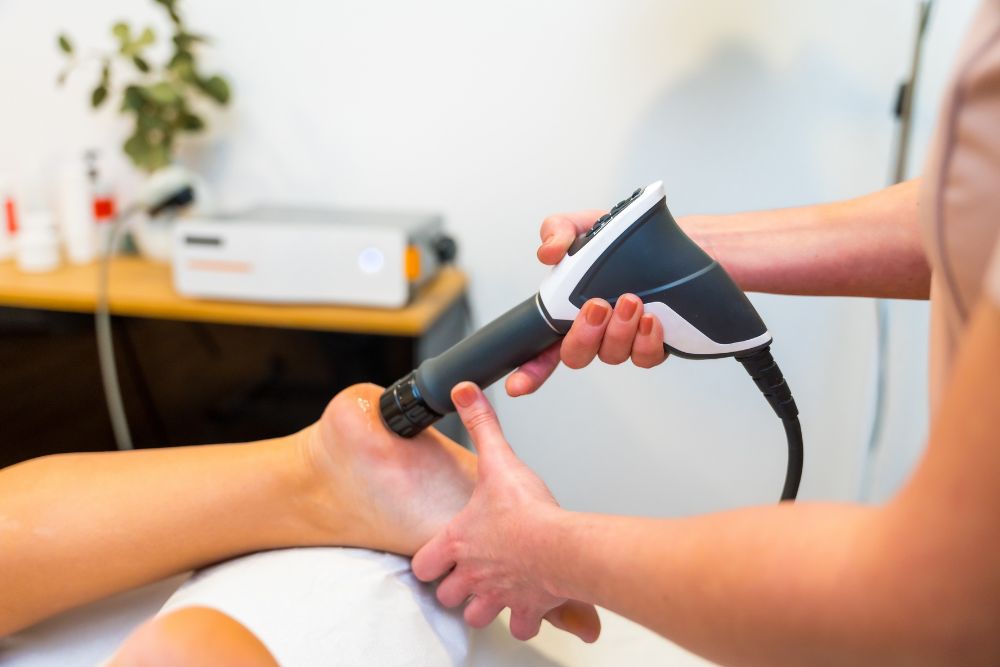
Shockwave therapy is a non-invasive treatment that uses targeted acoustic waves to stimulate a response in affected tissues. KC Wellness Center presents it as part of its broader conservative care model for pain, healing, and mobility support, including for shoulder pain and other musculoskeletal problems. The clinic’s service page describes shockwave therapy as a non-invasive treatment used to support healing and improve mobility in painful areas.
Patients are often interested in this kind of treatment because it does not involve surgery and does not require a long recovery period just to try it. That makes it appealing to people who want a more active approach than simply waiting, but who are not ready for invasive options or who want to avoid relying only on medication.
How Shockwave Therapy May Help A Frozen Shoulder
When frozen shoulder is present, several things may be happening at once. There can be irritation, guarding, pain-related movement avoidance, and reduced tolerance for normal daily use. In some patients, shockwave therapy may help by supporting pain reduction, improving local tissue response, and making it easier for the shoulder to tolerate movement and rehab work afterward.
That does not mean the shoulder suddenly returns to full range of motion after one session. Frozen shoulder is usually too stubborn for that kind of instant result. The more realistic idea is that shockwave therapy may help create a better environment for progress. If pain decreases or tissues become less reactive, the patient may be in a stronger position to move the shoulder, follow through with exercises, and work toward functional improvement more consistently.
Research Suggests It May Improve Pain And Function In Some Patients
Recent published research suggests extracorporeal shockwave therapy may improve pain and function in some frozen shoulder patients. A 2024 review and meta-analysis reported benefits in pain relief and functional improvement, and another 2024 study found added improvements in pain, disability, and range of motion in a combined-treatment context. That does not prove it is the best answer for every case, but it does support the idea that shockwave therapy can be a reasonable conservative option to consider in the right setting.
The key word, however, is some. Frozen shoulder is not identical from one patient to another. A treatment that helps one person noticeably may help another person more modestly. That is why evaluation matters so much.
Why Pain Relief Alone Is Not The Whole Goal
Patients understandably want the pain reduced first. That makes sense, especially when sleep is disrupted or the shoulder hurts with simple movement. But frozen shoulder care should not focus only on short-term comfort. The bigger goal is to help the shoulder function better over time.
If pain improves but the shoulder still remains severely restricted, the patient may still struggle with daily life. A better treatment strategy usually looks at both sides of the problem. It tries to calm the painful, irritated part of the condition while also supporting the long process of restoring mobility and practical use of the arm.
Shockwave Therapy Often Makes More Sense As Part Of A Bigger Plan
One of the most important things patients should understand is that shockwave therapy is usually not the entire plan by itself. Frozen shoulder often responds best when care is layered appropriately. That may include guided movement, shoulder-specific rehab strategies, chiropractic support, or other non-invasive treatment options depending on the person’s presentation.
KC Wellness Center’s broader service structure reflects that kind of multi-modality model. In addition to Shockwave Treatment, the clinic also offers services such as Class IV Laser Therapy, MLS Laser Therapy, chiropractic care, and condition-based treatment planning.
That matters because many patients need more than symptom reduction. They need a strategy that helps the shoulder tolerate movement again, reduce guarding, and gradually regain useful range without repeatedly flaring up.
Who May Be A Better Candidate For This Approach
Patients who may be more interested in shockwave therapy often include those dealing with persistent shoulder pain, limited mobility that has not improved enough with rest alone, or ongoing frustration with a shoulder that remains stiff and difficult to use. It may also appeal to patients who want a non-surgical option and are looking for a more active treatment plan rather than passive waiting.
That said, the best candidates are usually the ones who understand that recovery may still take time. Frozen shoulder is well known for being a condition that can last months and sometimes longer. Conservative treatment is often about helping the process move in a better direction, not pretending the condition can always be rushed.
What Patients Should Realistically Expect
A realistic expectation is not that one shockwave session will completely fix a frozen shoulder. A more practical expectation is that treatment may help reduce pain, improve tolerance for movement, and support better function over time, especially when it is paired with the right follow-through.
Some patients may notice that the shoulder feels a bit easier to move after treatment. Others may notice reduced pain first and mobility improvement later. In many cases, progress is measured in practical ways – better sleep, less discomfort during daily tasks, easier reaching, less guarding, or a shoulder that feels more cooperative during exercise and rehab work.
Why Timing And Clinical Judgment Matter
Because frozen shoulder changes over time, treatment should be adjusted to the stage and severity of the condition. A very irritated shoulder in a highly painful phase may need a different emphasis than a shoulder that is less painful but extremely stiff. Good care depends on recognizing what the shoulder needs most at that point in recovery.
This is one reason professional evaluation matters more than self-diagnosis. A patient may assume the problem is only inflammation, only scar tissue, or only weakness, when the actual clinical picture is more layered. The best plan usually comes from identifying what is driving the symptoms and then choosing the treatment mix accordingly.
When Frozen Shoulder Should Be Evaluated Promptly
Shoulder stiffness and pain are not always caused by frozen shoulder. Other conditions can overlap or mimic it, including rotator cuff problems, cervical referral, arthritis-related issues, or other shoulder injuries. That is why persistent pain and motion loss should be properly assessed, especially when the limitation is worsening, sleep is being disrupted, or normal activities are becoming more difficult.
A diagnosis-driven approach is more useful than simply chasing treatment trends. The better the condition is understood, the more effectively therapies like shockwave can be used.
Conclusion
Shockwave therapy may help some patients with frozen shoulder by reducing pain, improving tissue response, and making it easier to work toward better movement and function. It is not a guaranteed standalone fix, and it is usually most helpful when it is part of a broader treatment plan that takes into account the stage of the condition, the degree of stiffness, and the patient’s overall recovery goals.
For patients dealing with persistent shoulder pain and limited mobility, the most important thing is not finding a miracle treatment. It is finding an approach that supports progress in a realistic, structured, and non-invasive way. When used appropriately, shockwave therapy may be a valuable part of that process.
Shockwave Therapy At Khorrami Chiropractic Wellness Center
If you are dealing with shoulder pain, stiffness, or a frozen shoulder that is interfering with daily life, Khorrami Chiropractic Wellness Center offers Shockwave Treatment as part of its broader care model for pain relief, healing, and mobility support. The clinic also provides shoulder-focused care and related services designed to help patients move more comfortably and recover more effectively. To learn more, call (949) 770-0128 or visit the Schedule An Appointment page.